Ignidra The application
What Ignidra does beyond tracking
A tracker shows what happened. Ignidra also helps you understand why you won or lost, without ever playing for you.
Match prep
Before you keep your cards, know what your games say about this matchup.
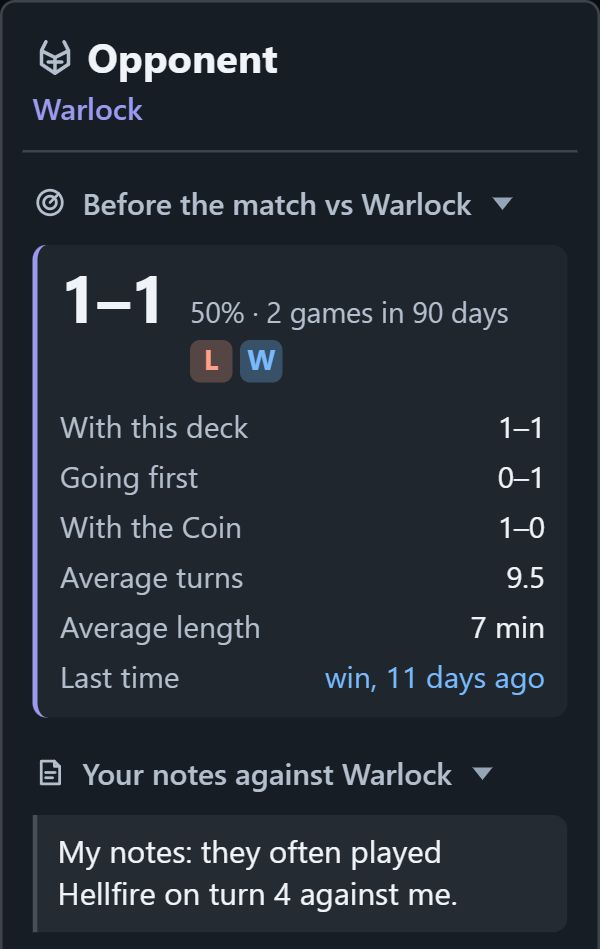
What you see
- Your record against this class over 90 days, and your last five results
- The same record with your current deck, going first and on the Coin
- Average turns and length, last meeting
- Your notes against this class
How it works
Ignidra identifies the opponent's class at the mulligan and searches your local history. Nothing leaves your PC.
Limits and rules
These are your own past results, with no verdict and no card to keep. The block disappears on turn three.
Lethal and threat sentinel
Never miss visible lethal again, and see the board that can kill you coming.
What you see
- “Lethal on board: 21 damage for 20 enemy Health”
- “Lethal blocked by 2 Taunts”
- Danger next turn: what their board and weapon can deal to you
- Within reach of their spells: their board plus the best direct-damage spell of their class
How it works
Ignidra adds up the visible numbers: attack, armor, Charge, Rush, Windfury, frozen or sleeping minions, attacks already made. For their spells, it looks through their class's cards for those that fit their mana next turn.
Limits and rules
Only the visible board counts: it's a minimum, and the panel says so. Lethal with the cards in your hand is only computed in the review, after the game.
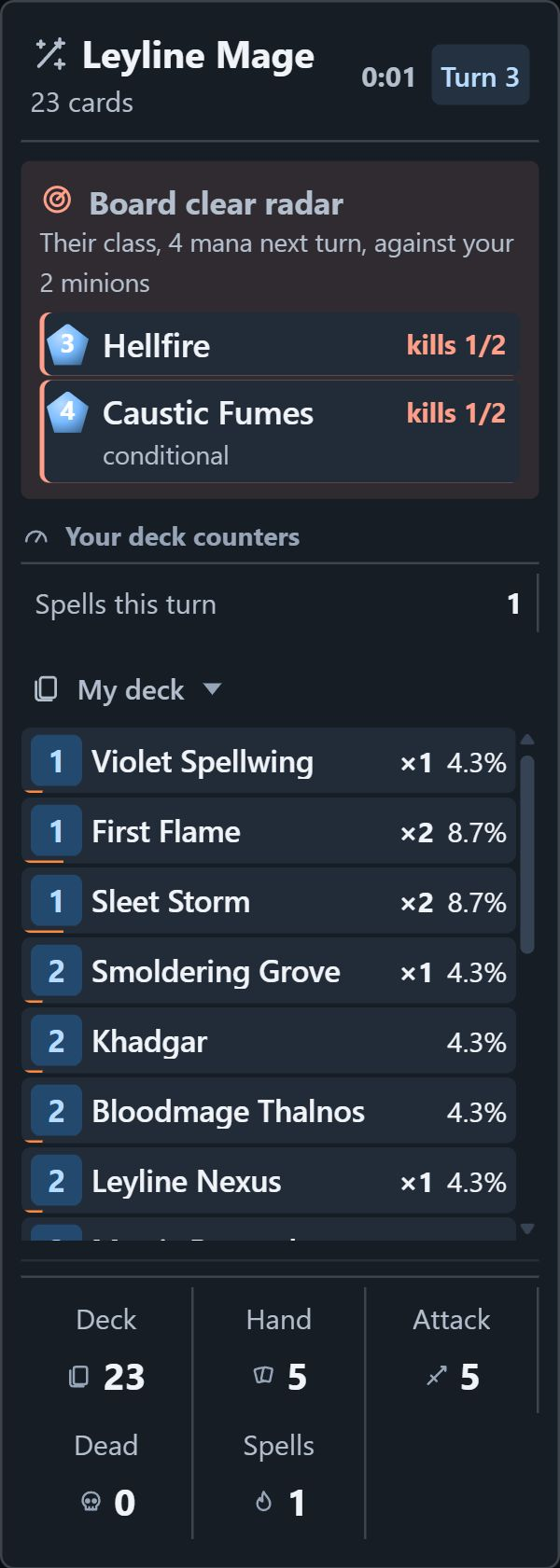
Board clear radar
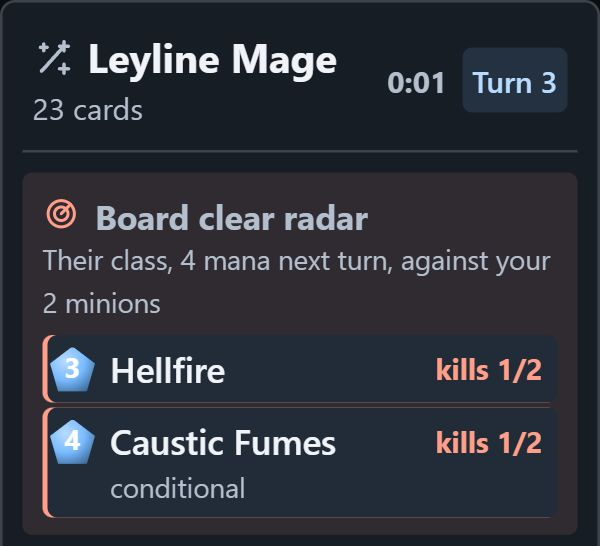
Before you drop one more minion, know what could sweep it.
What you see
- The 3 most dangerous board clears from their class within their mana next turn
- How many of your minions would die (Health, Divine Shield, their Spell Damage)
- Conditional cards flagged as such
How it works
Effects are read from card text. Out-of-format cards, and cards they've already played every copy of, are removed.
Limits and rules
A possibility, not a prediction: their hand stays unknown. In the review, Ignidra notes when a board clear it called actually hit.
Secrets: what would trigger them
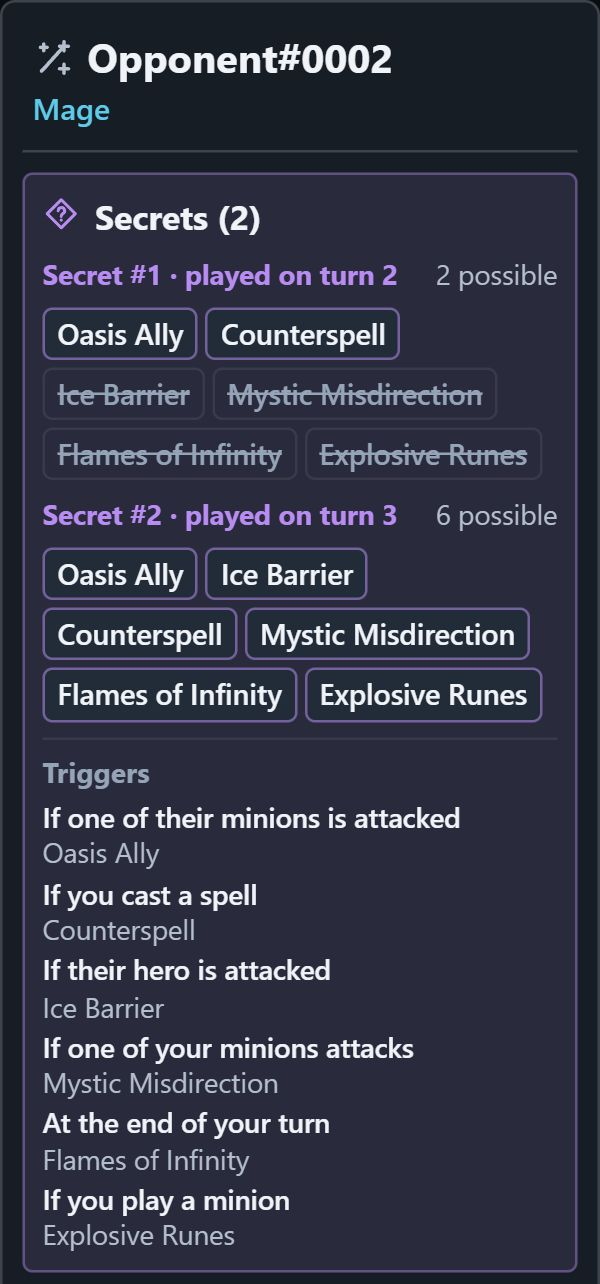
The list of possible Secrets, and what would pop each one.
What you see
- Candidates for their class and format, crossed out as actions happen
- For each Secret still possible, the action that would trigger it
- Cross-deduction between two Secrets in play
How it works
Two identical Secrets can't coexist: when one is revealed, it leaves the other's candidates. If a Secret triggers during an action, that action rules nothing out, since one Secret can block another.
Limits and rules
Worded as information about cards, never as an instruction.
Swing turn and missed lethals
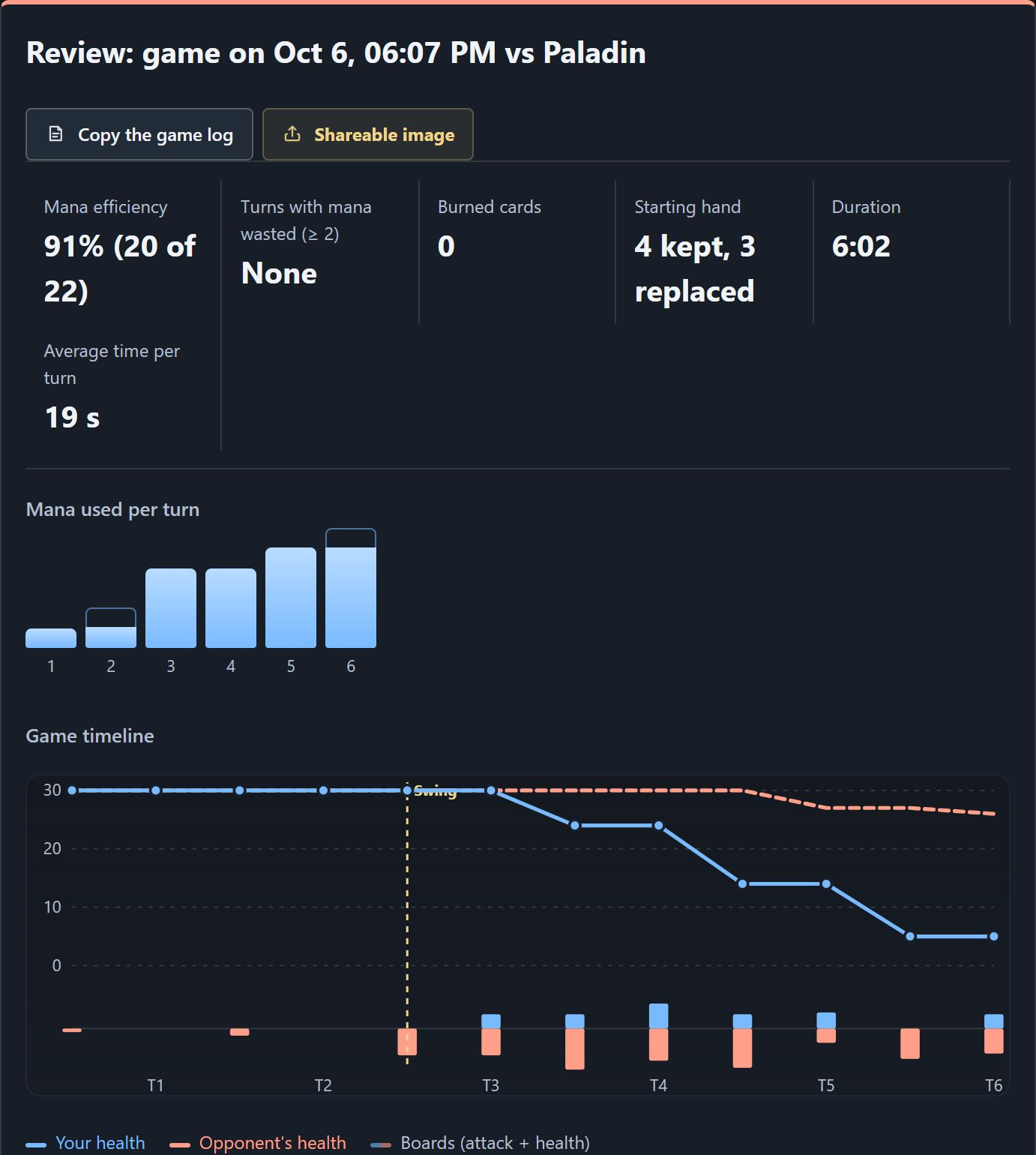
The review doesn't stop at numbers: it shows the moment that mattered.
What you see
- The turn the game swung, on board, in Health or in cards
- Every end of turn where lethal was available, board and hand included
- Board clears called by the radar that hit
- “Key takeaways” in a few sentences
How it works
Ignidra replays the game from the game log and compares the advantage from one full turn to the next. For lethal from hand, it reads your cards' text and only counts guaranteed damage.
Limits and rules
These suggestions only exist after the game: during the game, Ignidra never names a card to play.
The deck lab
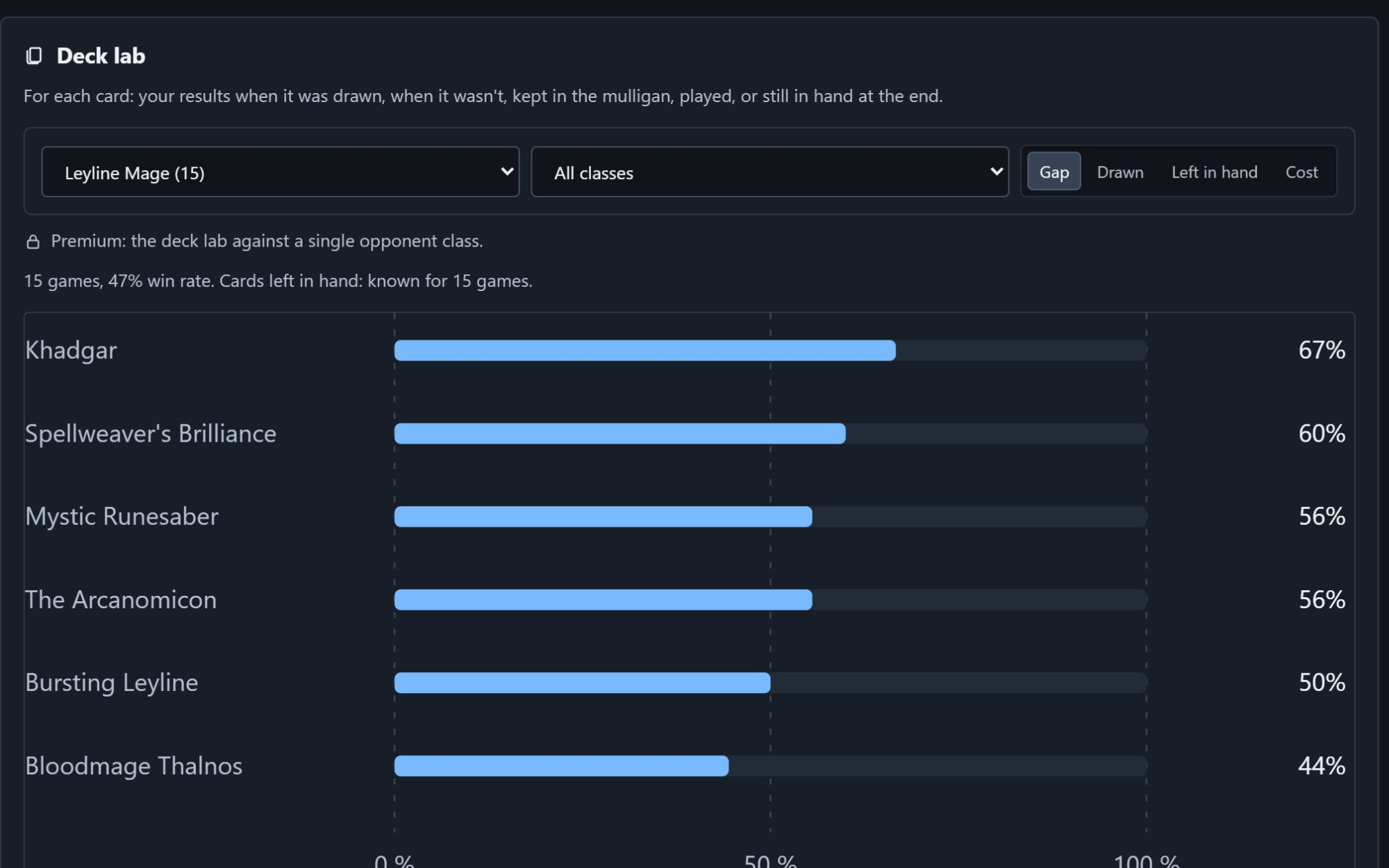
Which cards actually win you games, according to your games.
What you see
- Win rate when the card is drawn, and when it isn't
- Kept at the mulligan, played, still in hand at the end
- Sort by gap, by draw, by cost
- Coming with Premium: the same table against one opponent class
How it works
Ignidra cross-references your local history card by card. Small samples are greyed out.
Limits and rules
Your games only: no data from other players, nothing sent anywhere.
Opponent notebook and notes by class
Your player's memory, at the right moment.
What you see
- Cards opponents of this class have played against you in 90 days, checked off when they show up
- Your own notes, written in the review, recalled at the start of your next game against this class
How it works
Everything comes from your history and what you wrote.
Limits and rules
Like a notebook next to your keyboard: Ignidra adds no analysis or advice.
Opponent notebook and notes by class
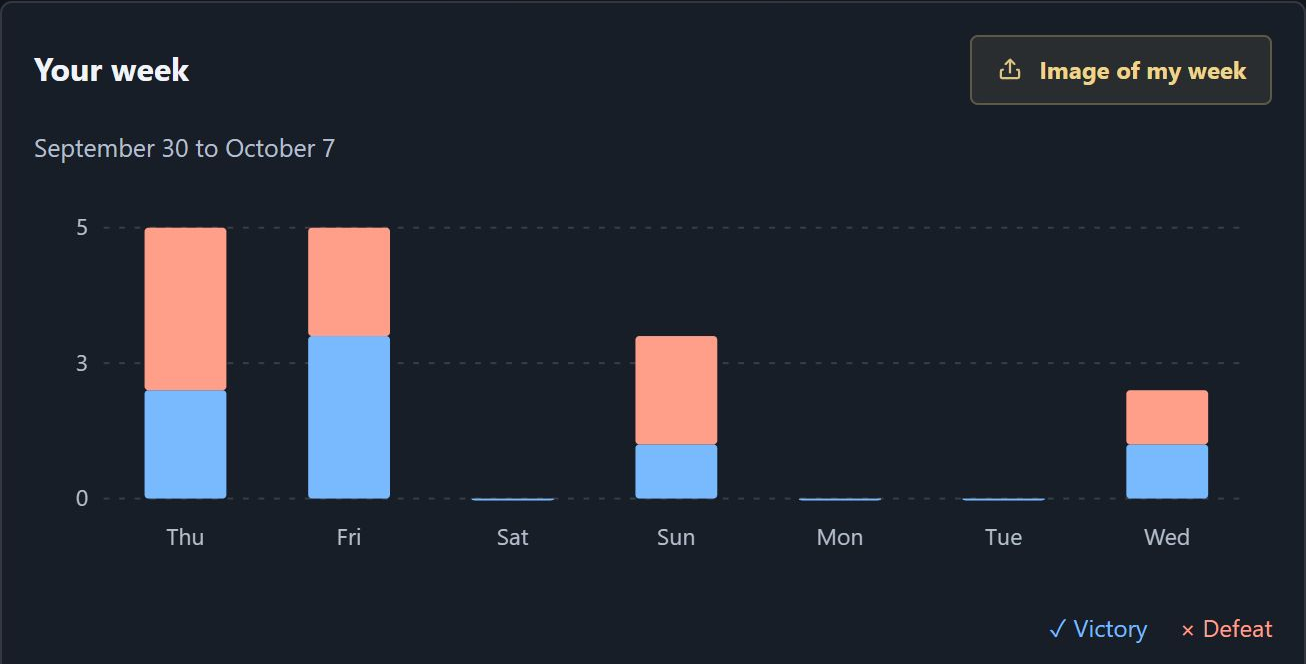
Your week and today's session
Step back, and know when to take a break.
What you see
- The last 7 days compared with the week before
- Best and worst matchup, longest streak, play time
- An image to share
- Today's session: after three losses in a row, a break suggestion
How it works
Computed on your PC from your history.
Limits and rules
No reward for play time: Ignidra never pushes you to play more.
Streamer mode, no extension
Your deck and your session on screen, in two minutes.
What you see
- Deck as a column or session bar
- Session record that animates when it changes
- Battlegrounds: hero, place, tavern, Health
- Themes, size and background of your choice
How it works
Ignidra serves a local page itself, which you add to OBS as a Browser source. No account, no online service.
Limits and rules
Never a player name on screen, neither yours nor your opponent's. In Battlegrounds, nothing before your screen shows it.

vs Warlock · Turn 3
- 1Violet Spellwing
- 1First Flame×2
- 1Sleet Storm×2
- 2Smoldering Grove
- 2Khadgar
- 2Bloodmage Thalnos
Premium and The Hearth
More is taking shape. The free tracker is already here.
Premium will add the deck lab against each opponent class. The Hearth will bring an optional account, Embers, learning missions, referrals and a monthly draw.
These services are not open: the server is not online yet. No opening date has been announced.
Explore the future Hearth
Ignidra
All of this is free
Tracking, reviews and the general deck lab are available. The lab by opponent class will arrive with Premium.